
Monday
Monday 27th October
Our morning began by visiting the church of St Mary Major, which was the cathedral of Assisi and the place where St Francis was hauled before Bishop Guido by his father after having taken cloth from his shop and selling it, along with a horse, to fund the renovation of the chapel of San Damiano. It was here that he famously stripped off his clothes and presented them to his father, renouncing his past life and dependence on his family:
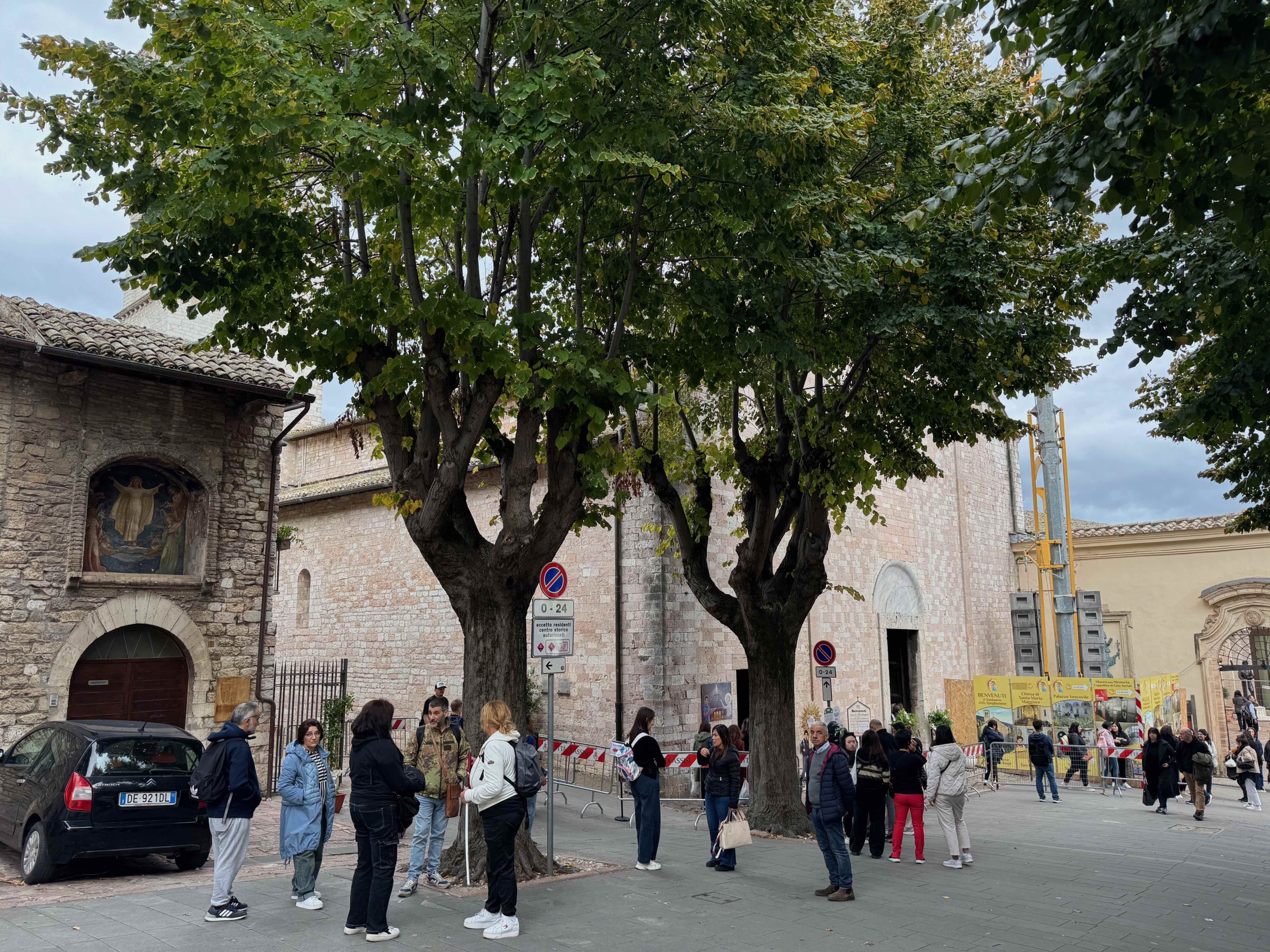
It is now also the burial place of St Carlo Acutis, canonised just a few weeks ago by Pope Leo. His body now lies in the church because he himself wished to be buried in Assisi as St Francis was so close to his heart (he was a regular visitor as his parents had a holiday home nearby). He looks very much like his 15 years, and he has clearly touched the lives of the thousands who stream past his remains every day (see here for the webcam of his tomb).
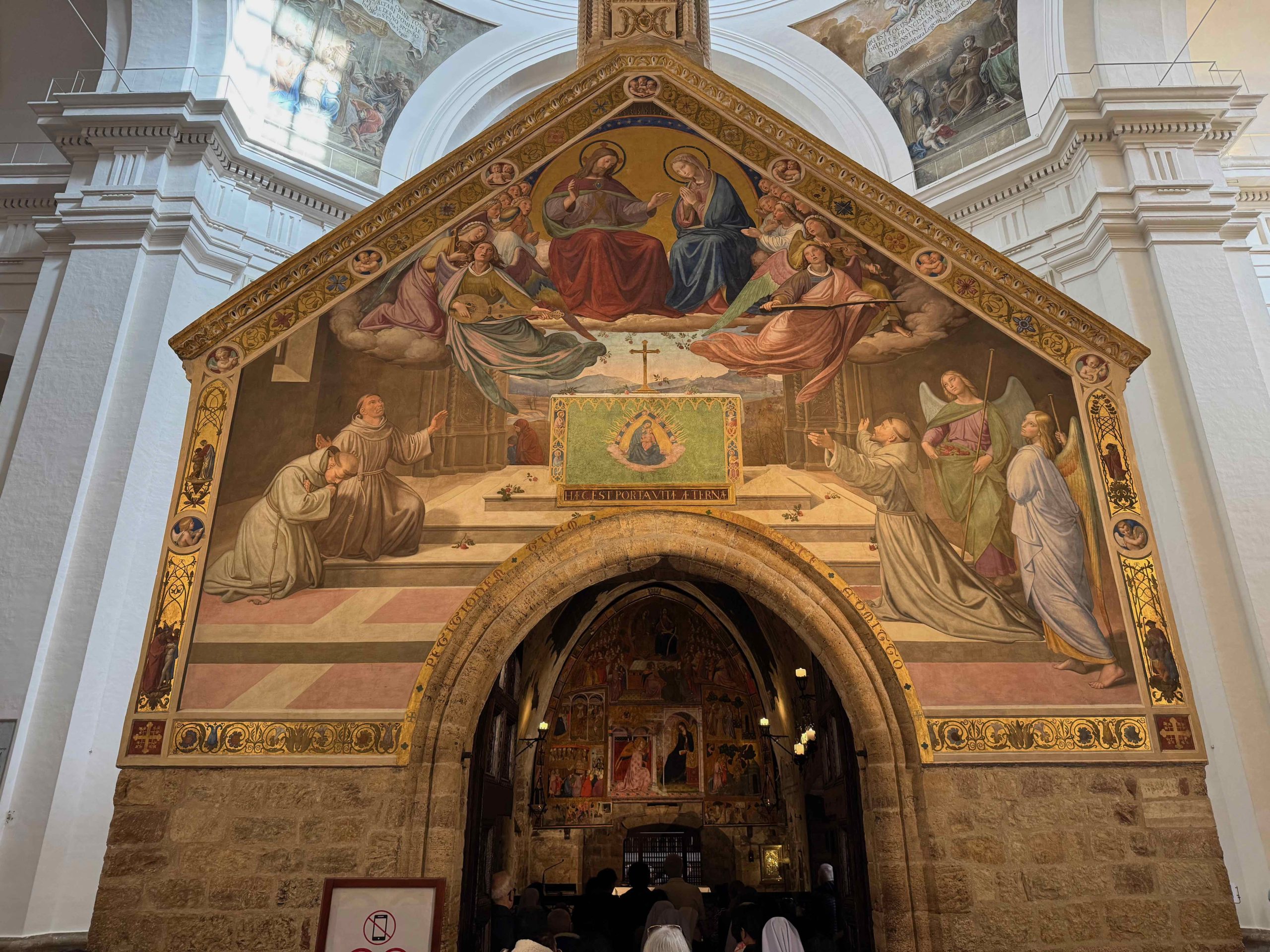
Then it was a nice steady trek down to the bus station and a short bus ride to the Basilica of St Mary of the Angels, which houses the Portiuncula, the little chapel that became the home of the Franciscan order. It was here that Francis received Clare into the order and where the annual meetings (“Chapters”) of the order took place:
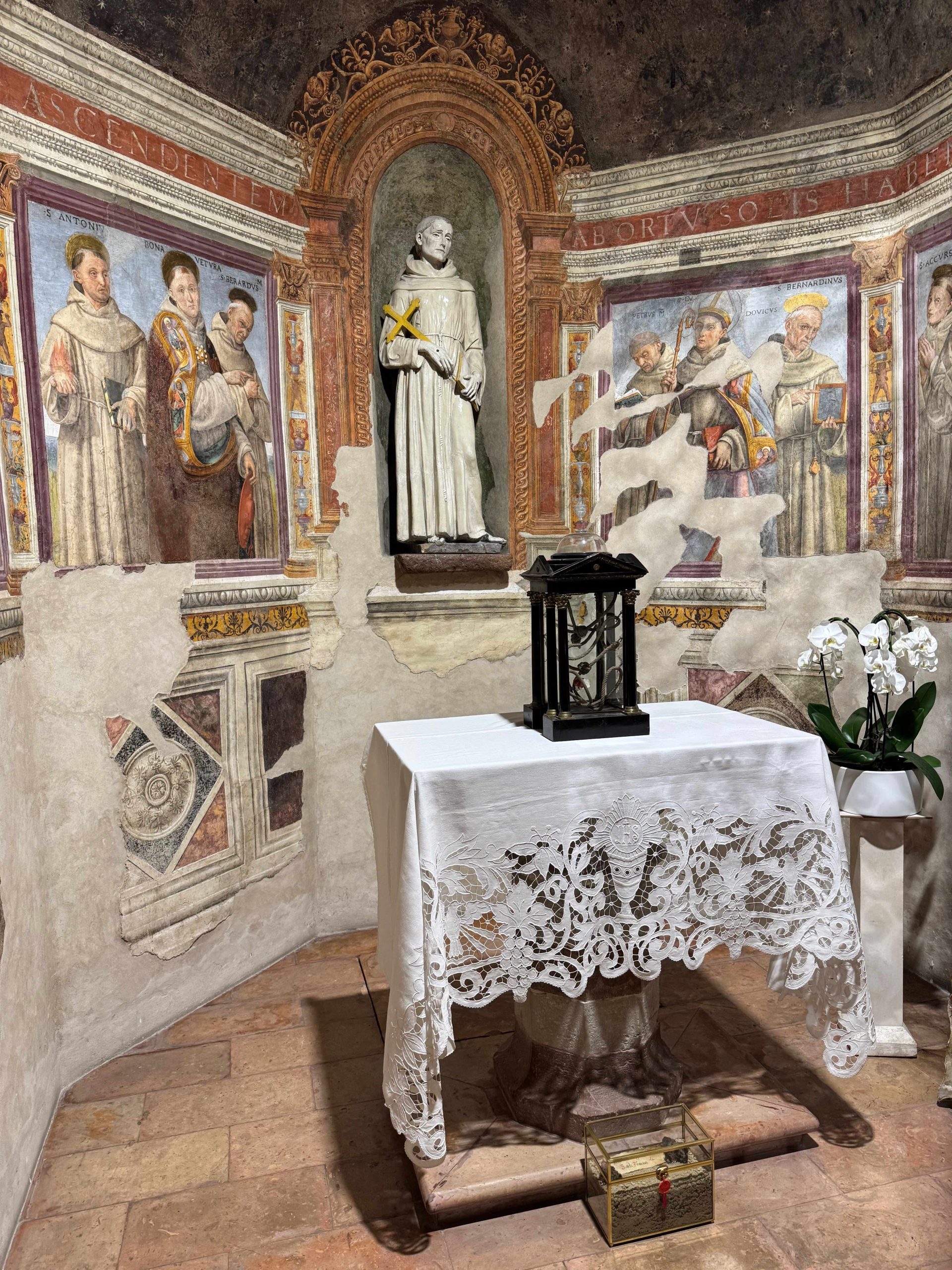
It was also the place where Francis died – in a cell just a few yards from the chapel in 1226, aged about 44 years:
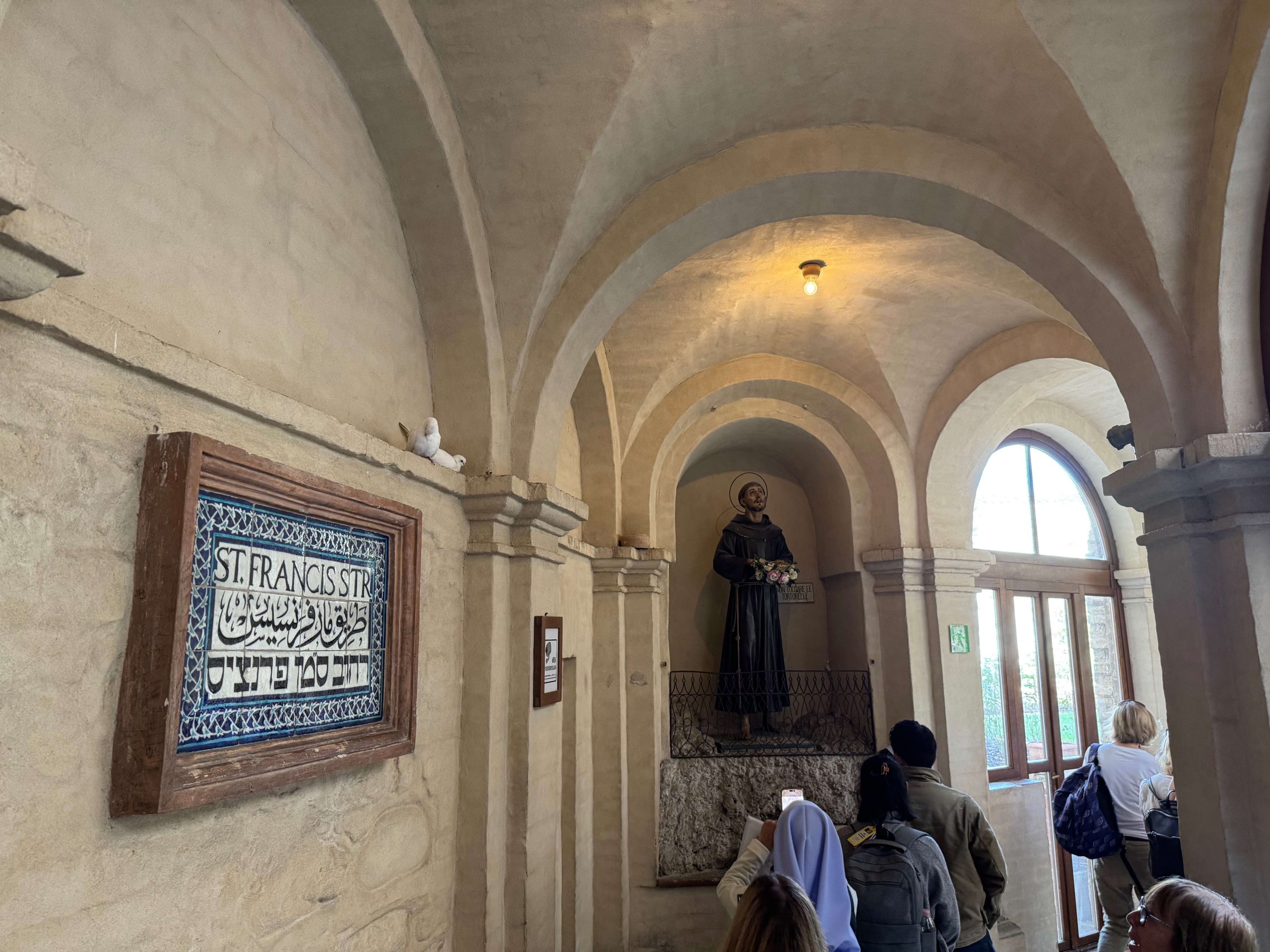
It is hard to imagine how it all looked in Francis’ time, with the chapel and little huts next to an ancient wood. It is here that Francis spoke to turtle doves (who still coo in the garden attached to the church) and where Francis battled with temptation by throwing himself into thorns. The legend goes that the roses subsequently shed their thorns there, and indeed remain so in the small garden:
Afterwards, we were shuttled by exploitative taxi rides to the truly lovely church of San Damiano:
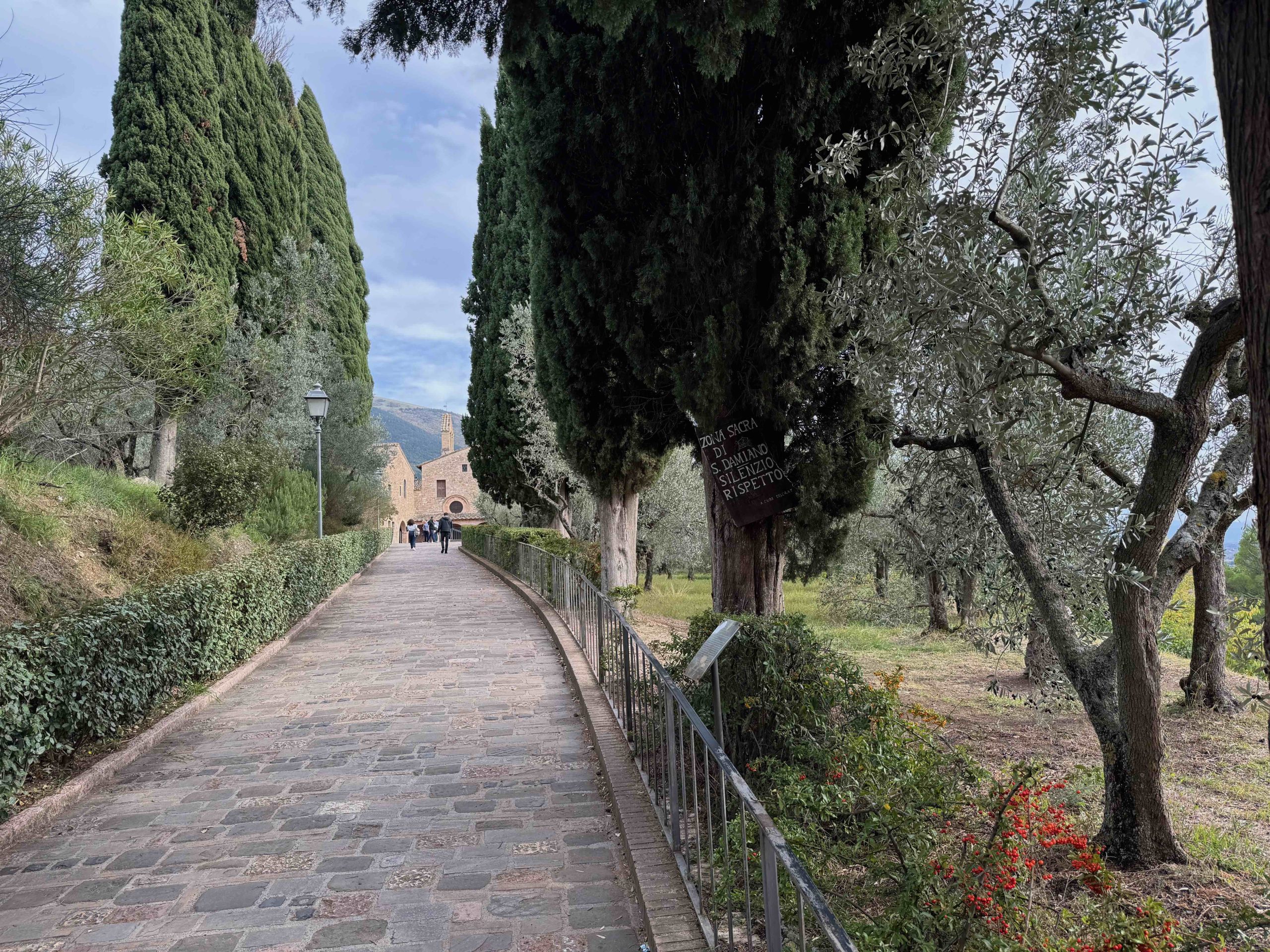
This is the chapel that Francis stumbled upon while on an errand for his father in 1205, when he was aged about 24. Having taken a year to recover from his imprisonment, Francis was still not the same person. He had almost certainly contracted malaria which made him delirious at times, but his traumatic experience of so much suffering and death made him more receptive and senstive. In the ruined church he was convinced of hearing the tender voice of Christ coming from the vividly colourful crucifix of the risen Lord among the rubble calling him to rebuild His church. That moment would change his life.
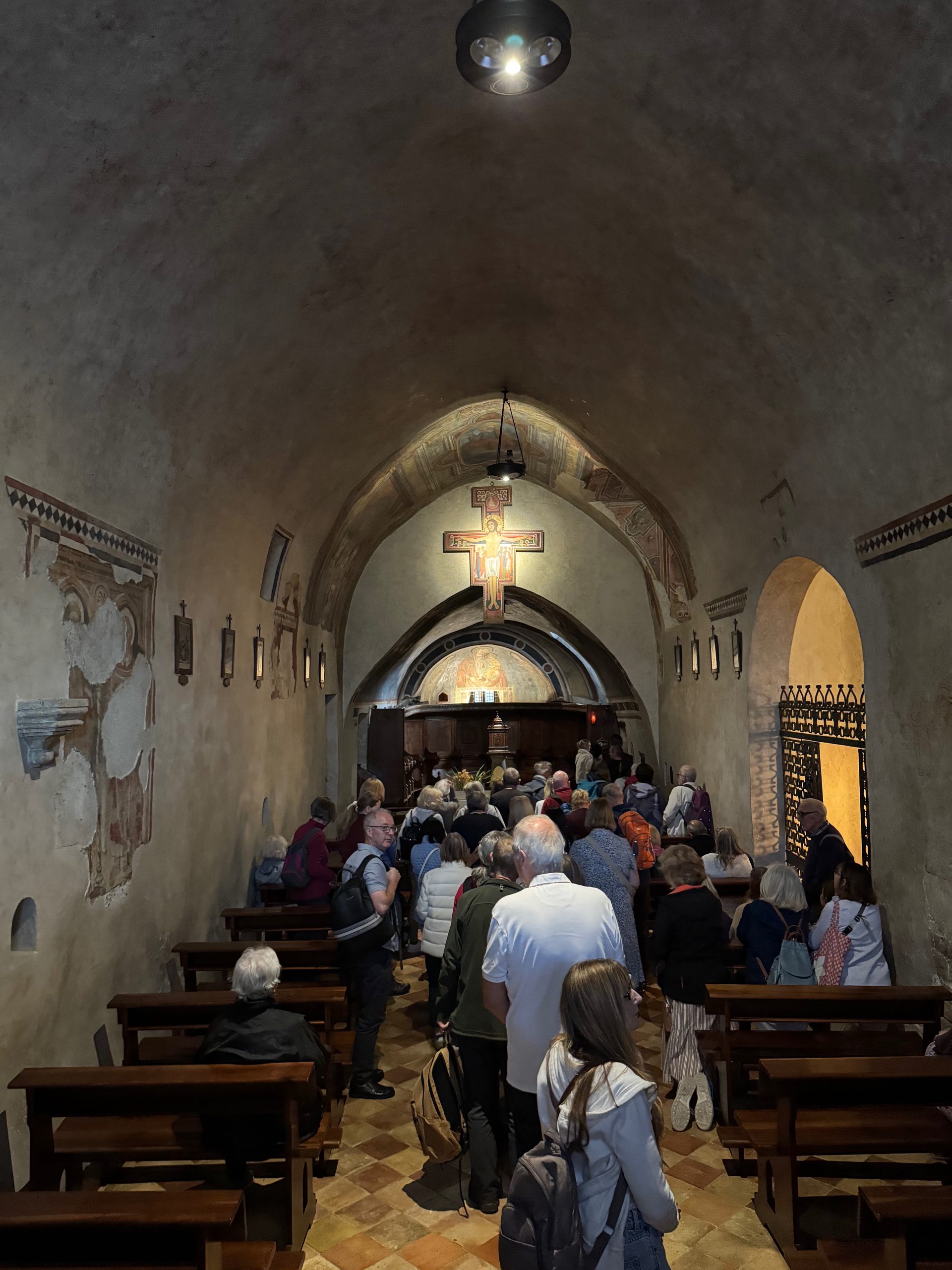
San Damiano is a lovely place, and it was always dear to Francis’ own heart. It was here that Clare’s order of “Poor Ladies” established their convent, and where Clare herself fought off the Saracen invaders by confidently holding up a monstrance with the Blessed Sacrament to repel them.
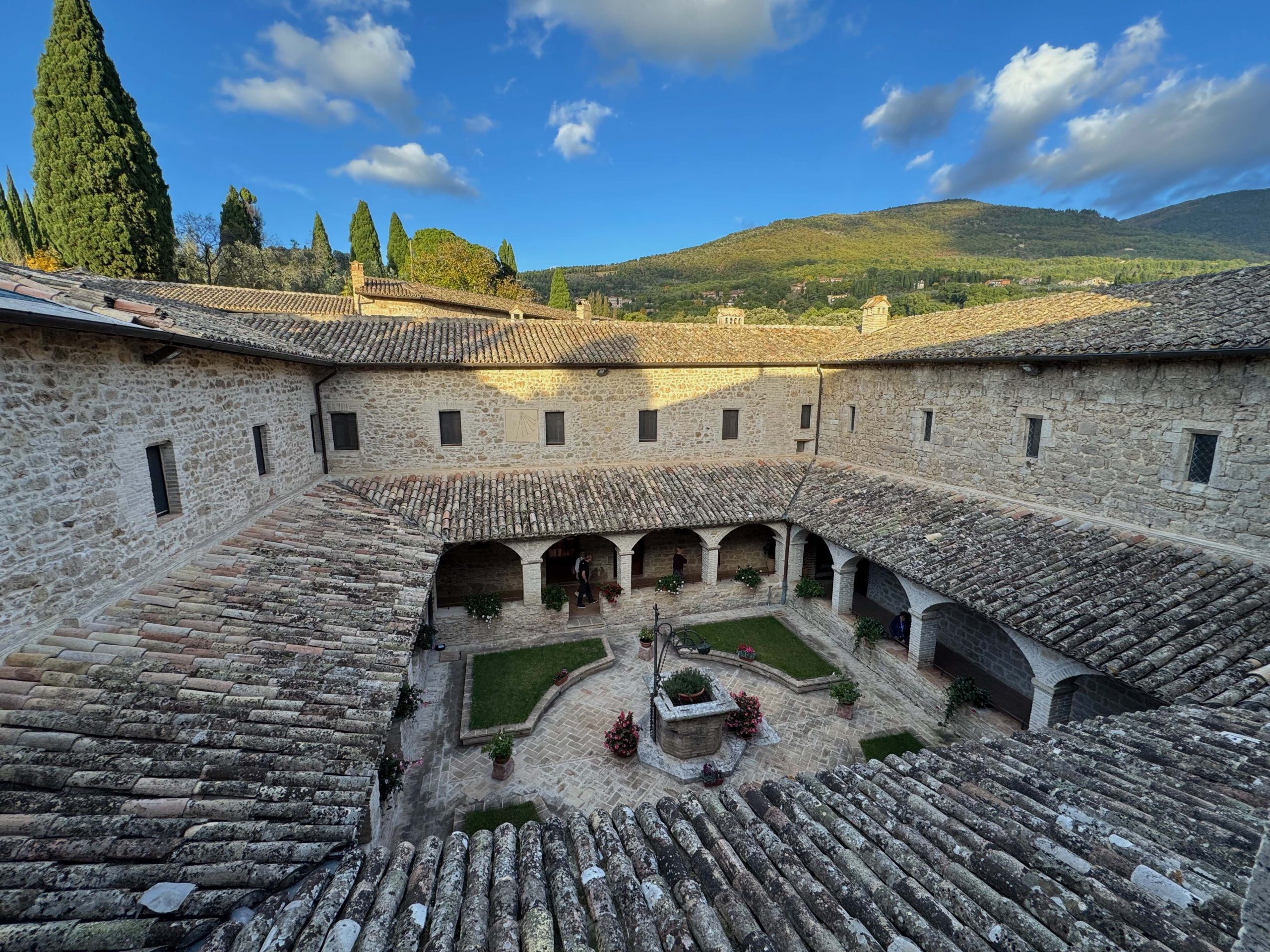
It was also here that Francis wrote his “Canticle of Creation” in 1225 – meaning that 2025 is it’s 800th anniversary. The fact that Francis was virtually blind and incapacitated when he wrote it says something of the enormous faith in the power of the beauty of God’s creation that he retained to the end.
We celebrated Mass together in a room by the cloister and reflected on the story of Francis up to and immediately after his extraordinary experience with the crucifix, and how in the moment when he stripped himself of his clothes and past life he was transformed into the powerful public speaker and orator.
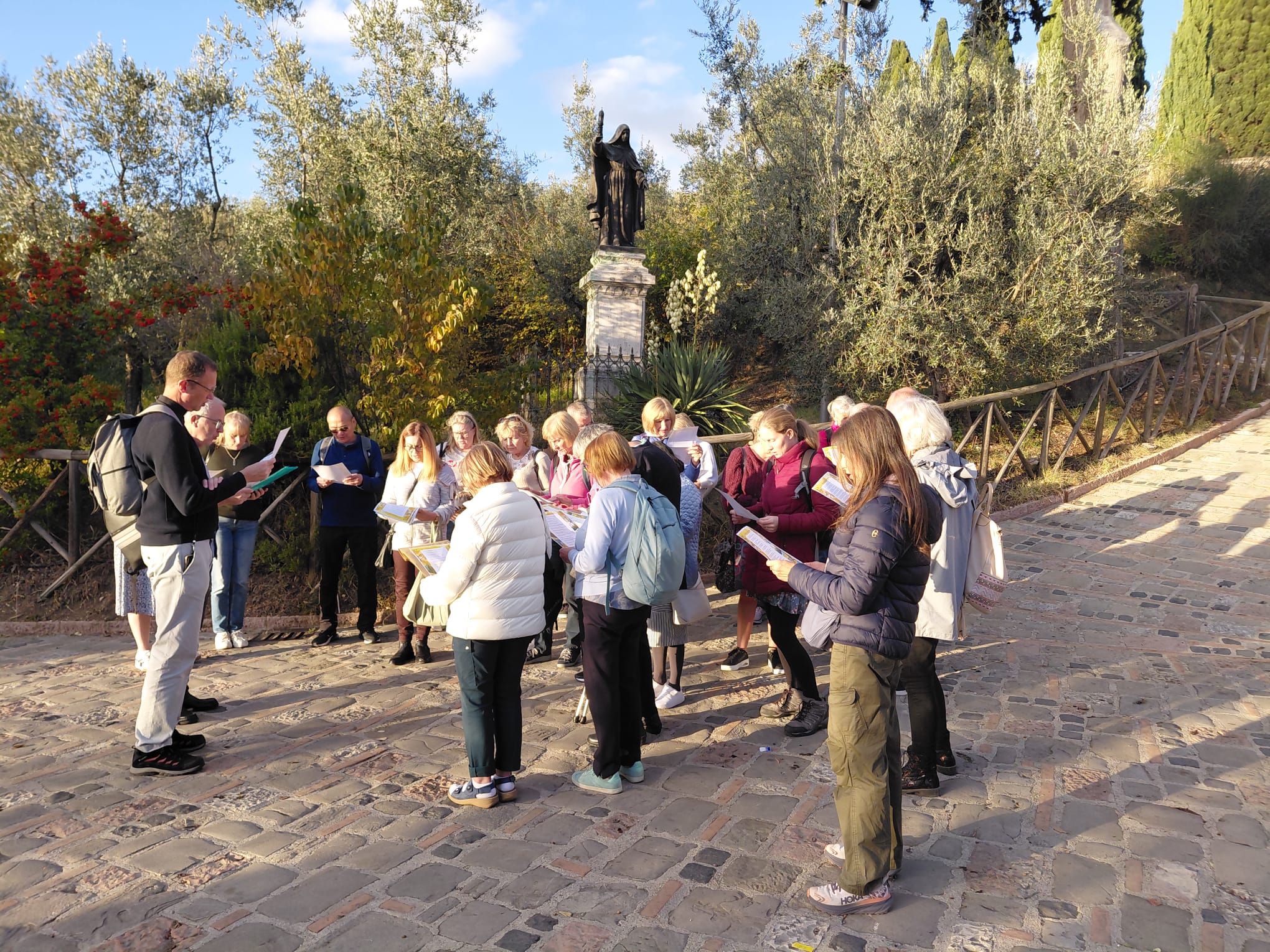
We enjoyed a beautiful art exhibition inspired by the Canticle of Creation, and then gathered outside to recite the Canticle and sing its phrases:
Most High, all-powerful, good Lord,
yours is the praise, the glory and the honour and every blessing.
To you alone, Most High, do they belong,
and no one is worthy to speak your name.
Praised be you, my Lord with all your creatures,
especially Sir Brother Sun, who is the day through whom you bring us light.
And he is lovely, shining with great splendour,
for he heralds you, Most High.
Praised be you, my Lord, through Sister Moon and Stars.
In heaven you have formed them,
lightsome and precious and fair.
And praised be you, my Lord, through Brother Wind, through air and cloud, through calm and every weather by which you sustain your creatures.
Praised be you, my Lord, through Sister Water,
so very useful and humble, precious and chaste.
Praised be you, my Lord through Brother Fire,
by whom you light up the night, and he is
handsome and merry, robust and strong.
Praised be you, my Lord,
through our Sister, Mother Earth,
who sustains us and directs us
bringing forth all kinds of fruits
and coloured flowers and herbs.
Praised be you, my Lord
through those who forgive for your love
and who bear sickness and trial.
Blessed are those
who endure in peace,
for by you, Most High,
they will be crowned.
Praised be you, my Lord,
through our Sister Bodily Death
from whom no living being
can escape.
How dreadful for those
who die in mortal sin!
How blessed are those she
finds in your most holy will
for the second death
can do them no harm.
O praise and bless my Lord,
thank him and serve him
humbly but grandly!
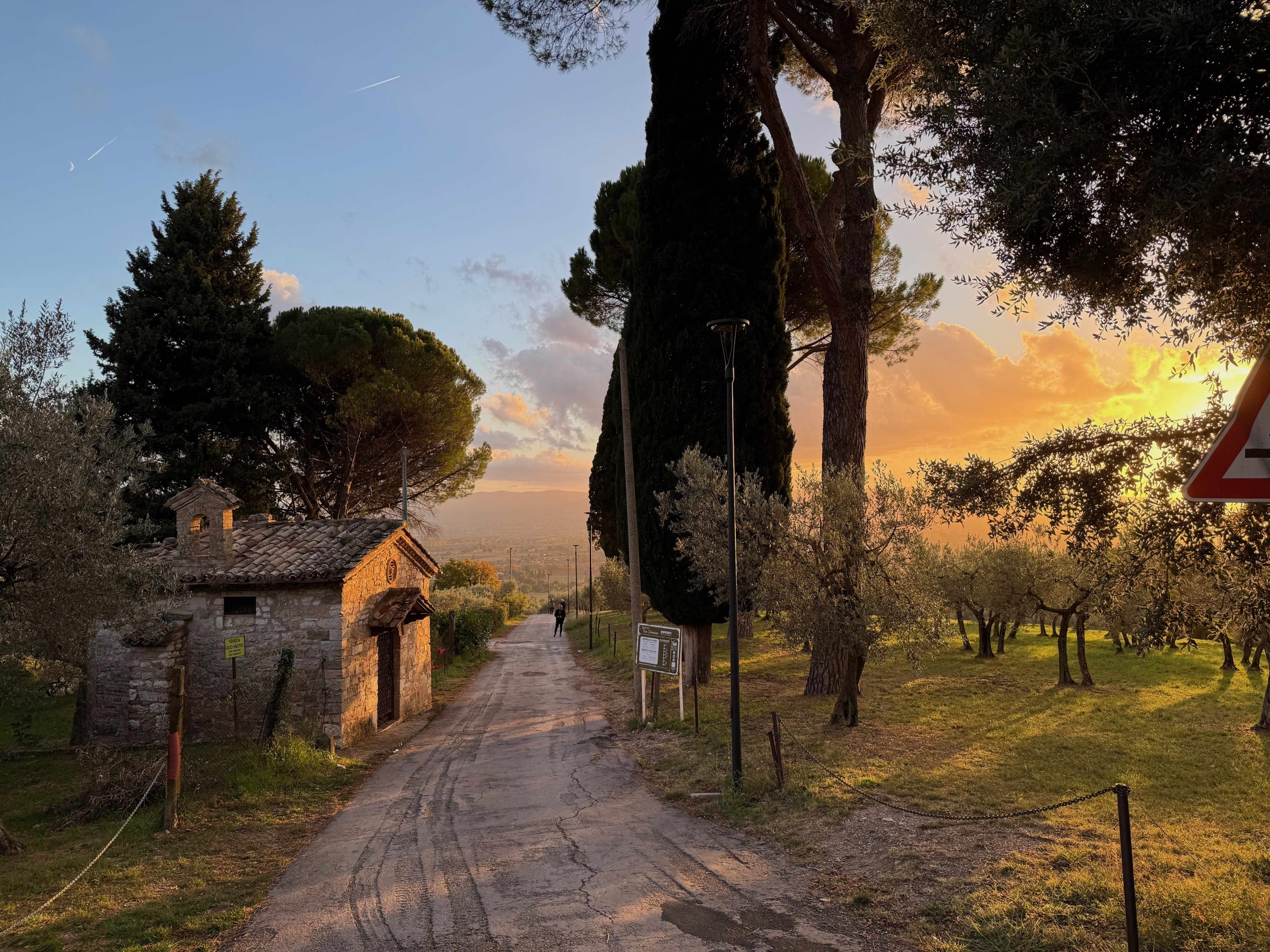
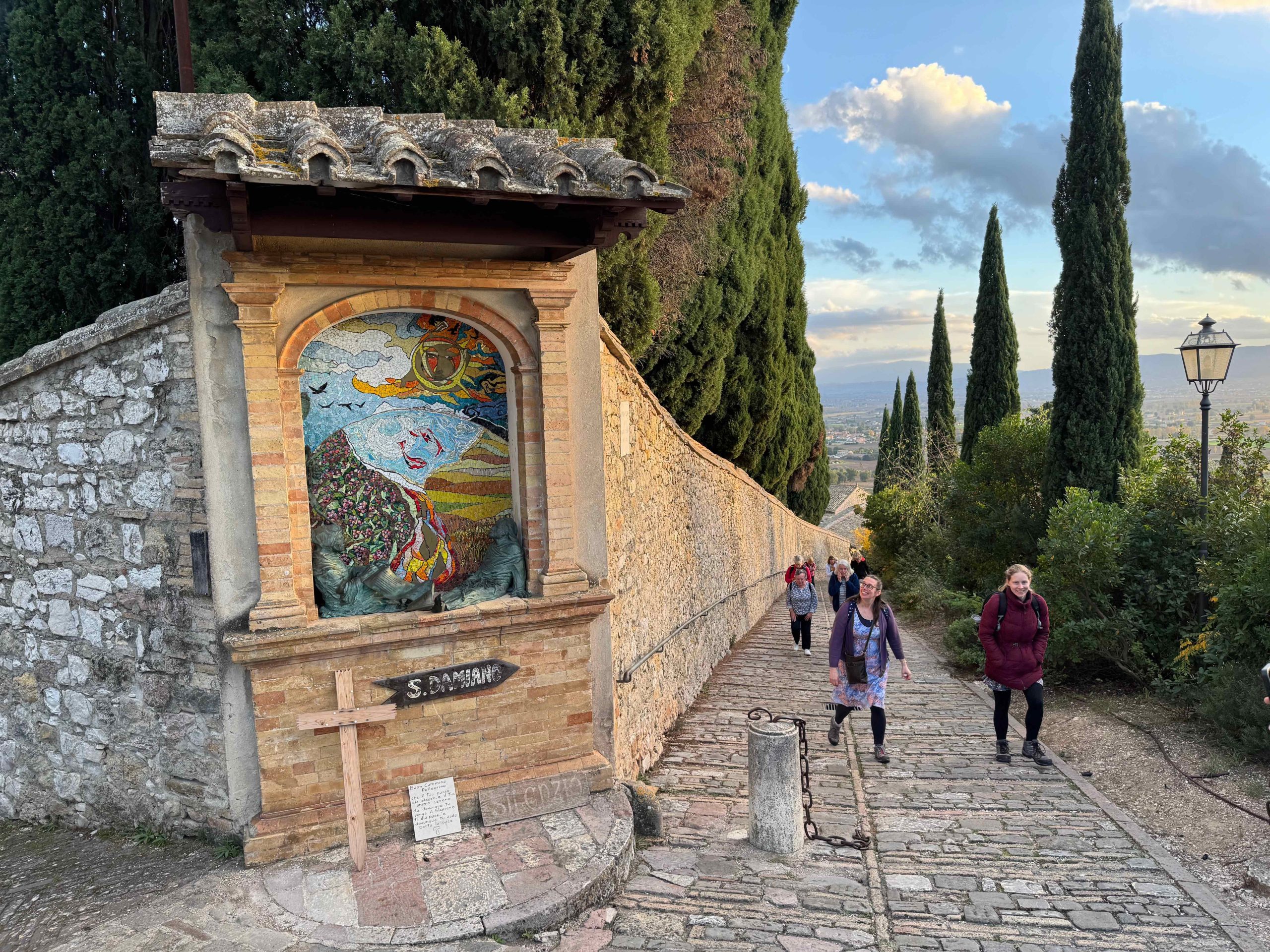 It has to be said that on the walk back uphill to Assisi, even Francis’ words cannot do justice to the Eternal Word at work about us:
To go back to our itinerary click here